

Coșul tău
Noutățile companiei
Noutăți E-Malt
Kenya: Diageo to sell its stake in East African Breweries to Asahi Group
World: Global hop harvest lower this year, Barth Haas say
USA, NM: Two Bosque Brewing locations in Albuquerque closing their doors
World: Global hop acreage down 5% in 2025
Malțurile noastre


Hameiurile noastre

Hameiuri noi

Drojdiile noastre




Condimentele noastre



Zahărul nostru




Capacele noastre
-
 CC29mm TFS-PVC Free, Alb with oxygen scav.(7000/cutie)
Adaugă în coş
CC29mm TFS-PVC Free, Alb with oxygen scav.(7000/cutie)
Adaugă în coş
-
 Capace 26mm TFS-PVC Free, Reflex Blue col. 2203 (10000/cutie)
Adaugă în coş
Capace 26mm TFS-PVC Free, Reflex Blue col. 2203 (10000/cutie)
Adaugă în coş
-
 Capace 26mm TFS-PVC Free, Red Neu col. 2151 (10000/cutie)
Adaugă în coş
Capace 26mm TFS-PVC Free, Red Neu col. 2151 (10000/cutie)
Adaugă în coş
-
 Kegcaps 74 mm, Negru 91 Flatfitting A-type (700/cutie)
Adaugă în coş
Kegcaps 74 mm, Negru 91 Flatfitting A-type (700/cutie)
Adaugă în coş
-
 Crown Caps 26 mm TFS-PVC Free, Negru col. 2439 (10000/cutie)
Adaugă în coş
Crown Caps 26 mm TFS-PVC Free, Negru col. 2439 (10000/cutie)
Adaugă în coş
Certificate
-
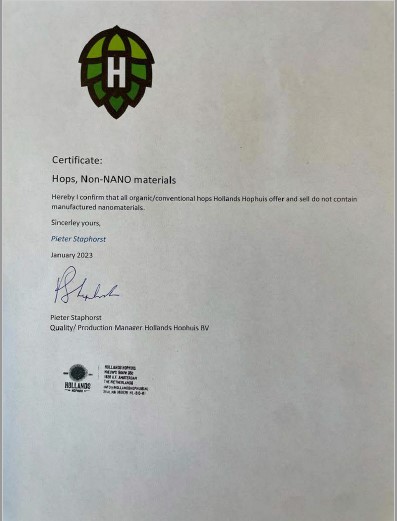 Hollands Hophuis Certificate Non-NANO materials 2023
-
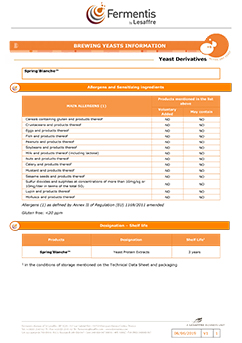 Fermentis - Brewing Yeasts Information ENG - Spring’Blanche
-
 La Malterie du Château | FCA Malt Certificate 2022 (Français) (2021-2024)
-
 Malt Attestation of conformity for non-irradiation, non-ionization, and the absence of nanomaterials 2024 (ENG)
-
 Hops, HVG, Organic Certificate 2024
Sugestie
Abonați-vă



 Canada: Feed barley prices drifting lower despite limited supplies
Feed barley prices have been drifting lower despite limited supplies of the crop, the Western Producer reported on November 25.
Agriculture Canada estimated total supply for 2023-24 at 8.75 million tonnes, down 17 percent from the previous year.
Yet prices have tumbled by about C$100 per tonne since the start of the calendar year.
“There are a number of factors which have contributed to the price moderation of feed barley,” Alberta Agriculture crop market analyst Neil Blue said in a recent article published on the government’s website.
Livestock feeders have gotten used to working with feed barley substitutes in recent years when barley was in short supply.
Cattle feeders in Lethbridge have been using feed wheat, milling wheat, oats and importing corn from the United States.
“Feeding imported corn has become common when price competitive,” he said.
Canada has imported 261,800 tonnes of U.S. corn in the current marketing year, more than five times the volume of the same period last year.
Strong export demand from China had also been propping up Canadian feed barley prices. But that demand is waning now that China has removed its import tariffs on Australian barley.
Canadian bulk barley exports through week 16 of the 2023-24 campaign total just 742,700 tonnes, versus 1.05 million tonnes for the same period one year ago.
GrainFox analyst Neil Townsend thinks the main reason feed barley prices are slumping is that corn and wheat prices are also under pressure.
“The general grains complex has been an anchor on barley prices because barley doesn’t have enough of a story on its own to break away from that,” he said.
He also noted that livestock numbers have expanded little in North America despite access to cheaper grain.
Another bearish factor is that Saudi Arabia, which used to be the world’s leading buyer of the crop, has dramatically cut its purchases in recent years.
Canada doesn’t ship to that market, but it means there is more barley to compete with in other markets like China, North Africa and the European Union, said Townsend.
Blue said there are some bullish influences for feed barley.
“The shortage of hay for cattle feeding may lead to more straw-grain rations, with barley, oats and pellets the most likely concentrate source,” he said.
Blue also thinks export prospects will improve as the crop year unfolds now that prices have dropped.
Townsend agrees.
He has seen reports that wheat production in Western Australia will be down 5.5 million tonnes compared to last year, while barley production will drop by 2.7 million tonnes.
That will come directly out of the country’s 2023-24 export program, which means China will be looking to Canada for supplies later in the campaign.
“That could support prices,” he said.
There is also speculation that Brazil’s second corn crop will be reduced because of the late start to soybean planting in that country, which could also support world grain prices.
Blue also pointed out that while U.S. corn imports will remain a “major factor” in the Canadian barley pricing equation, some livestock feeders prefer feeding barley even if it is priced at a premium to corn.
Înapoi