

Il tuo carrello
Notizie Aziendali
E-Malt news
UK: Britons drinking less alcohol than before
The Netherlands: Heineken fined for distributing beer cans without mandatory deposit
Argentina: Barley crop forecast maintained at 5.4 mln tonnes
Australia: Barley harvest almost complete and likely to reach 15.8 mln tonnes
I nostri malti


I nostri luppoli
-
 BELMA (USA) Pellets T90 (5KG)
Aggiungi al carrello
BELMA (USA) Pellets T90 (5KG)
Aggiungi al carrello
-
CASCADE BIOLOGICO (AU) Pellets T90 (5KG)
Aggiungi al carrello
-
MILLENIUM BIOLOGICO (USA) Pellets T90 (5KG)
Aggiungi al carrello
-
CASHMERE BIOLOGICO (USA) Pellets T90 (5KG)
Aggiungi al carrello
-
GOLDINGS BIOLOGICO (BE) Pellets T90 (5KG)
Aggiungi al carrello
Luppoli nuovi

I nostri lieviti



Le nostre spezie


I nostri zuccheri
I nostri tappi
-
 Tappi 26mm TFS-PVC Free, Blue Neu col. 2832 (10000/box)
Aggiungi al carrello
Tappi 26mm TFS-PVC Free, Blue Neu col. 2832 (10000/box)
Aggiungi al carrello
-
 Crown Caps 26 mm TFS-PVC Free, Giallo col. 2165 (10000/box)
Aggiungi al carrello
Crown Caps 26 mm TFS-PVC Free, Giallo col. 2165 (10000/box)
Aggiungi al carrello
-
 Tappi 26mm TFS-PVC Free, Red Neu col. 2151 (10000/box)
Aggiungi al carrello
Tappi 26mm TFS-PVC Free, Red Neu col. 2151 (10000/box)
Aggiungi al carrello
-
 Kegcaps 64 mm, Rosso 102 Sankey S-type (EU) (1000/box)
Aggiungi al carrello
Kegcaps 64 mm, Rosso 102 Sankey S-type (EU) (1000/box)
Aggiungi al carrello
-
 CC29mm TFS-PVC Free, Rosso with oxygen scav.(7000/box)
Aggiungi al carrello
CC29mm TFS-PVC Free, Rosso with oxygen scav.(7000/box)
Aggiungi al carrello
Ricette per birra


Certificati
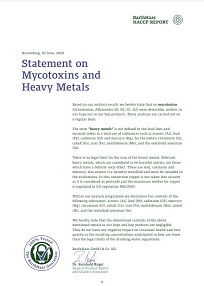 Barth Haas Hops: Statement on Mycotoxins and Heavy metals 2022
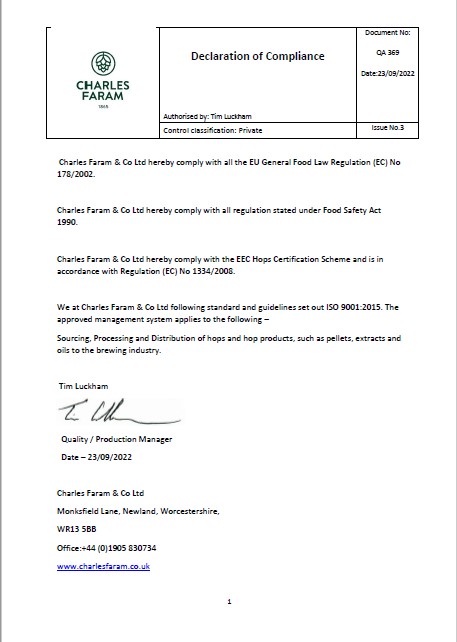 ChF Hops, Declaration of Compliance QA369, EN 2022
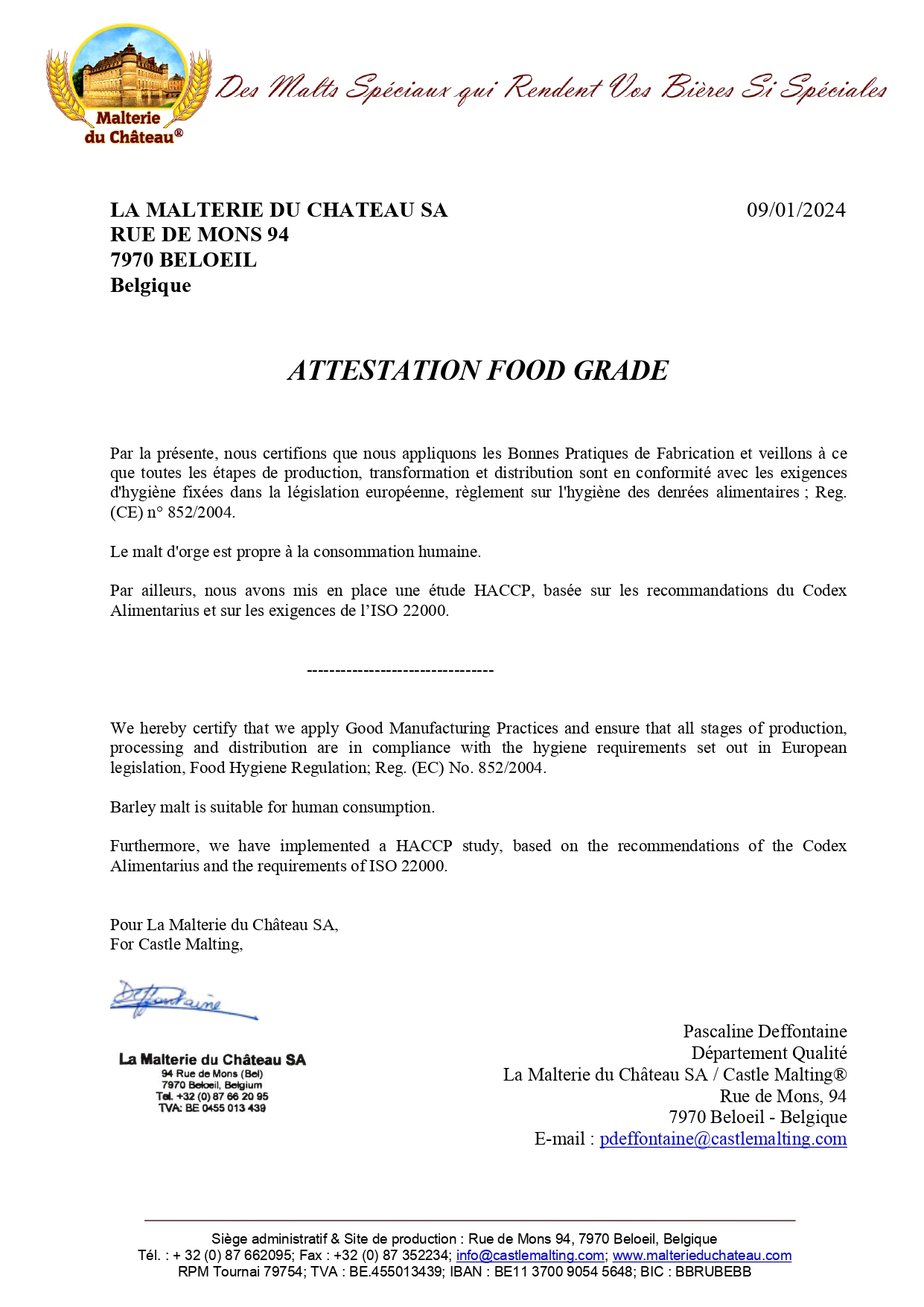 Malt Attestation GMP & HACCP 2024 (ENG) (FR)
 Organic Certificate ENG: Malt, Hops, Spices and Sugar - Jul 2025-Mar 2028
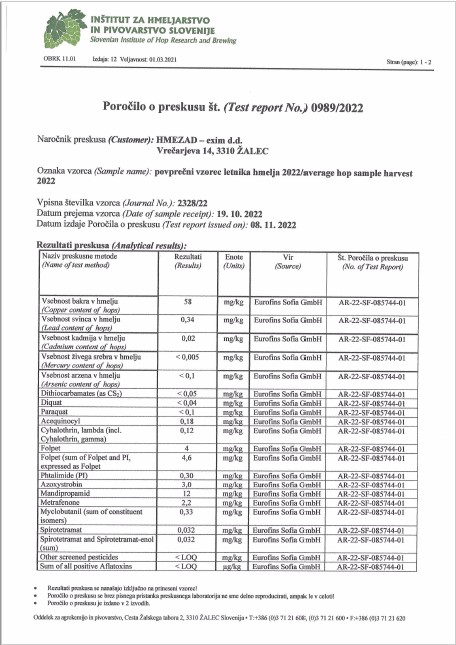 Hmezad Hops, Heavy Metals Certificate 2022
Suggerimento
Join us



 UK: Decline in barley availability more than offset by fall in demand in 2023/24
The 2023/24 Early Balance Sheets for wheat and barley were published on October 17, which provide a first look at supply and demand for the season ahead. For wheat, a yearly fall in availability, combined with a climb in domestic consumption, sees a much tighter balance than the 2022/23 season. For barley, declines in availability are more than offset by a fall in demand; this leads to expectations of a heavier barley balance this season compared to last, AHDB reported.
At 6.021 Mt, total domestic consumption of barley is estimated down 120 Kt on the year. Despite an anticipated rise (up 1%) in human and industrial consumption, a 3% decline in barley usage for animal feed outweighs these gains.
Human and industrial barley usage is estimated to reach 1.991 Mt this season, up 11 Kt on the year; if realised, this will be the highest since the late 1990s. Anecdotal reports suggest the cost-of-living crisis is expected to impact brewing demand, but demand for distilling will remain robust due to increased capacity coming online last season.
Usage of barley for animal feed is forecast to decline by 129 Kt on the year, to sit at 3.814 Mt. The reason for this is that wheat and maize are expected to price more competitively than barley this season, meaning barley inclusions in rations have been reduced.
Torna