

Unternehmensnachrichten
Branchennachrichten
Mexico: 80% of Mexicans choose beer over other alcohol, survey shows
Bolivia: Beer imports reach value of €42 million in 2024
Canada: Oldest brewing school in the Americas relocating from the US to Canada
Nigeria: Nigerian brewers regaining momentum after two years of mounting losses
Unsere Malze





Unsere Hopfen

New Hops


Unsere Hefen



Unsere Gewürze





Unsere Kandiszucker





Unsere Kronkorken
-
 Kronkorken 26mm TFS-PVC Free, Cyan Transparent col. 2892 (10000/Karton)
in den Warenkorb
Kronkorken 26mm TFS-PVC Free, Cyan Transparent col. 2892 (10000/Karton)
in den Warenkorb
-
 CC29mm TFS-PVC Free, Weiß with oxygen scav.(7000/Karton)
in den Warenkorb
CC29mm TFS-PVC Free, Weiß with oxygen scav.(7000/Karton)
in den Warenkorb
-
 Kegcaps 69 mm, Blau 141 Grundey G-type (850/Karton)
in den Warenkorb
Kegcaps 69 mm, Blau 141 Grundey G-type (850/Karton)
in den Warenkorb
-
Kegcaps 69 mm, Schwarze 91 Grundey G-type (850/Karton)
in den Warenkorb
-
Kegcaps 69 mm, Weiß 86 Grundey G-type (850/Karton)
in den Warenkorb
Bierrezepte





Zertifikate
 Malt Kosher Certificate July 2025-June 2026
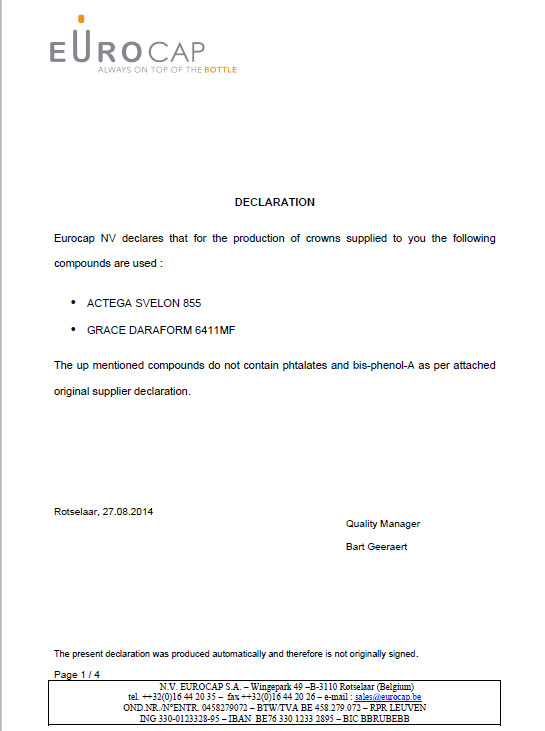 Crown Caps EUROCAP Bisphenol EN
 Organic Rice Husk Certificate FR - 2023 - 2025
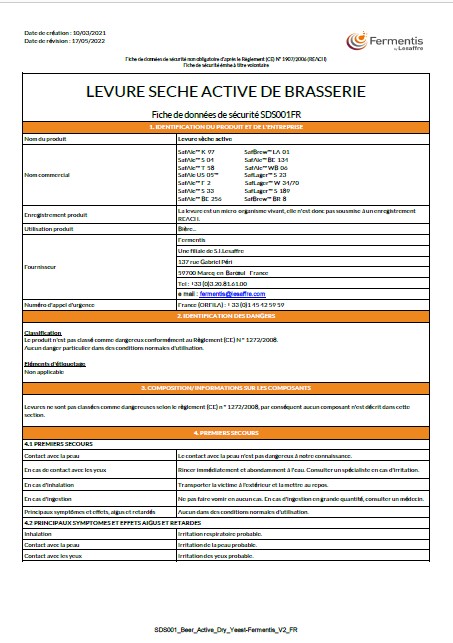 Fermentis - SDS001 Beer Active Dry Yeast Fermentis FR
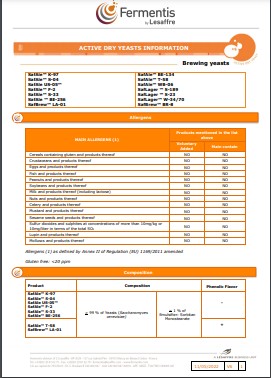 Fermentis - Brewing Yeasts Information 2023
Vorschlag
Join us



 EU: Record EU soft wheat, barley crop highest since 2008 expected this year
This year’s European Union soft wheat crop is expected to have reached a record high, commodities research company Expana said on September 11 after raising its estimate on the back of bigger than forecast harvests in central and northern EU countries.
In its latest monthly report, Expana pegged EU soft wheat production for the 2025/26 season at 136.1 million metric tons, 3.3 million tons above its August projection.
That was up 19.8 per cent from 2024/25 and beats the previous record of 135.6 million tons in 2015.
Global grain harvest forecasts for 2025/26 have risen sharply in recent weeks, particularly for soft wheat in Australia and Russia and corn in the United States, which should intensify competition in animal feed and export markets, Expana said.
“Given the expectation of a record global soft wheat harvest, European exporters will face an uphill struggle to offload this season’s exportable surplus,” it said.
EU soft wheat exports have been rather sluggish since the start of the 2025/26 season, owing to strong competition from Russian wheat and the lack of Chinese imports, it noted.
Expana also increased its barley crop outlook to its highest since 2008 at 56.2 million tons. That was 1.4 million tons higher than last month’s estimate and would also lead to hefty barley stocks at the end of the season.
Grain quality for this year’s wheat and barley has generally met market requirements, though protein levels were relatively low in several countries.
In contrast to winter crops, Expana cut its maize harvest forecast for a third consecutive month to 55.7 million tons, from 55.9 million tons in August and down 5.4 per cent from 2024/25.
Since planting, growing conditions have been especially unfavourable in southeast Europe and France, it said.
Zurück